Event Date
Geosynthetic Applications for Reinforcement
You will see real-world project case studies from Geosynthetics Ltd and learn how our engineering department can directly support your project.
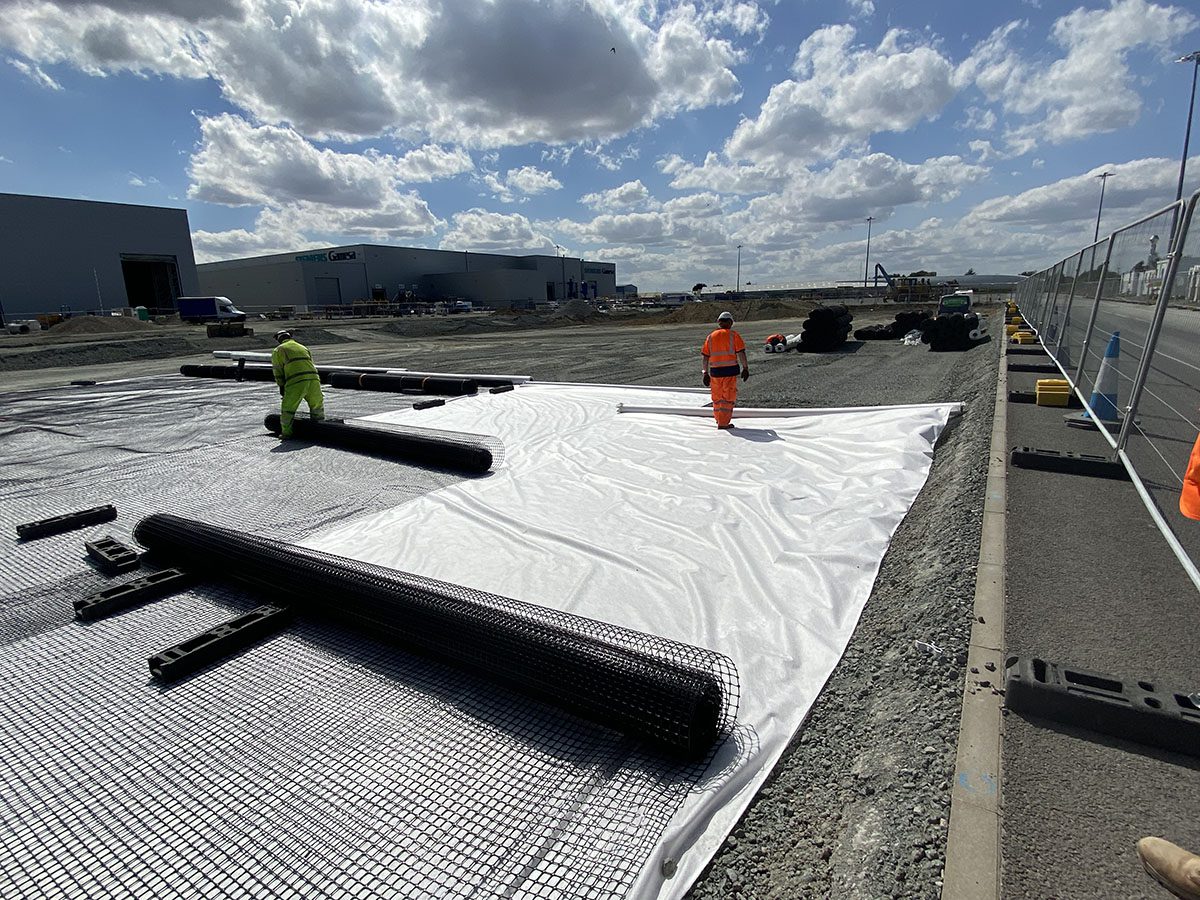
Ekotex® non-woven geotextiles offer a versatile and reliable solution for ground engineering projects. Thermally bonded and needle-punched for superior performance, these fabrics are a core part of the Geosynthetics Ltd range, designed to meet the demands of modern construction and civil engineering applications.
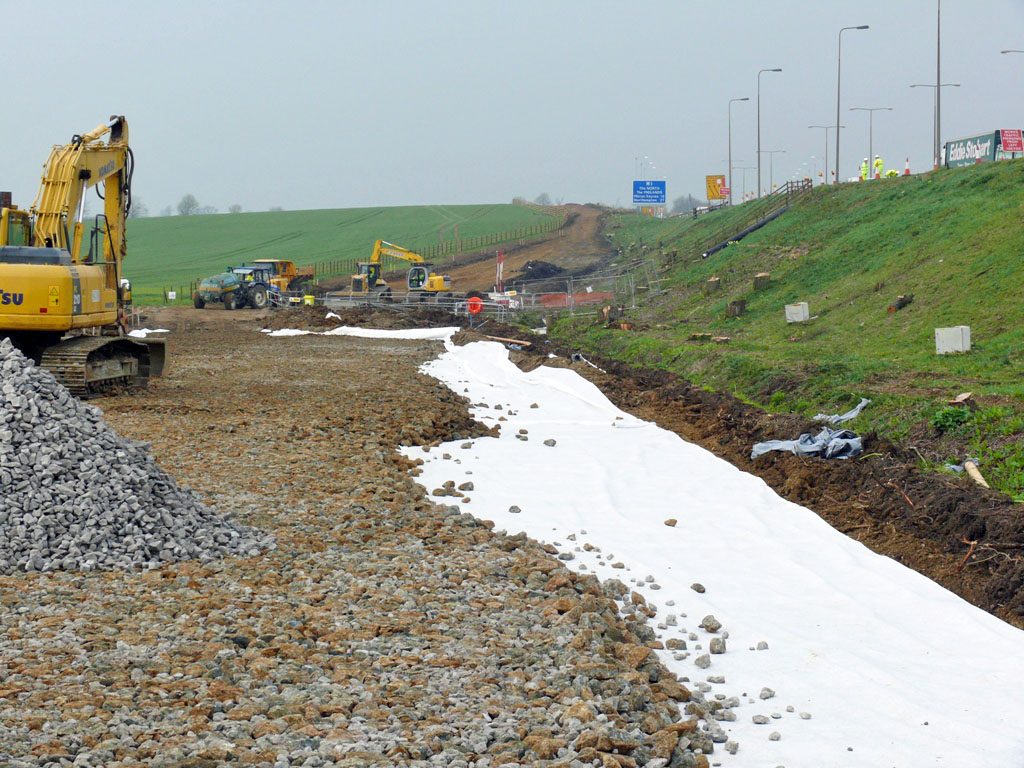
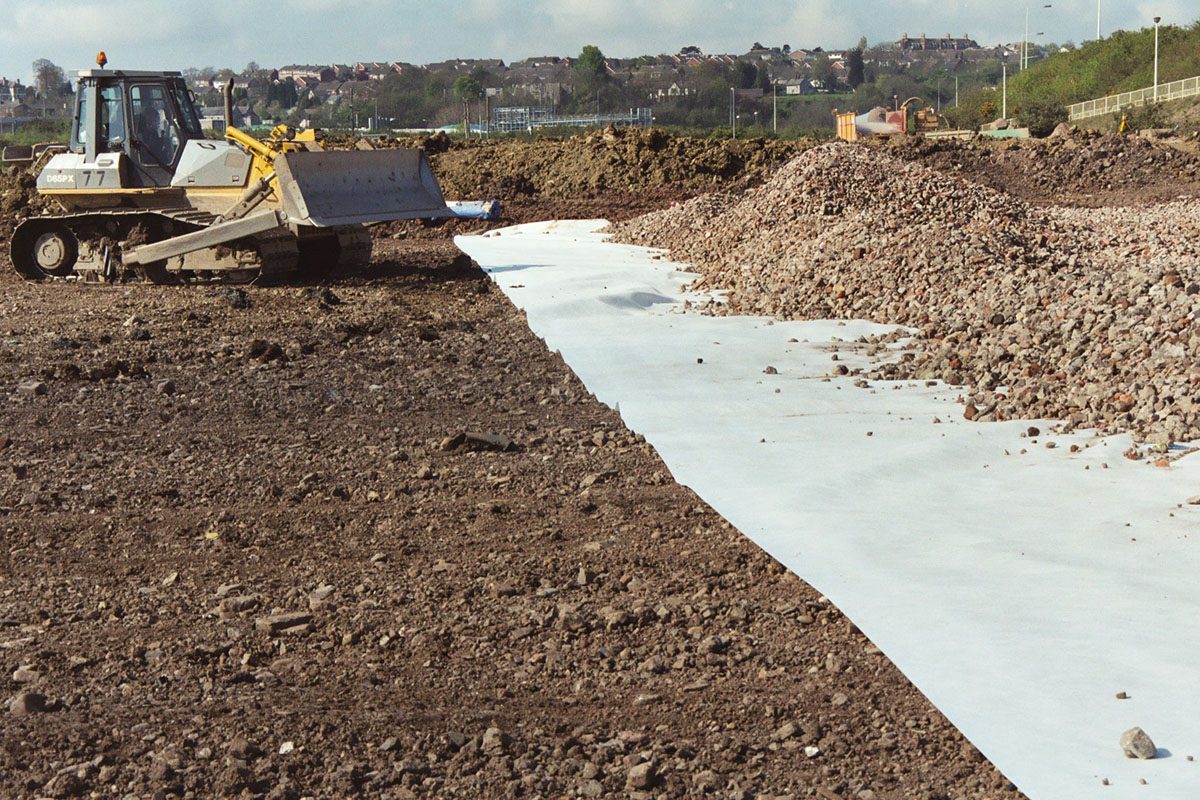
Commonly specified for separation, protection, filtration, and drainage, the Ekotex® non-woven geotextile range is a staple in our engineering department’s recommendations. It is the geotextile of choice for projects involving reinforced working platforms, piling mats, and gabion walls. To meet high market demand, we stock a wide range of grades from 80g/m² to 300g/m², available in various widths for immediate dispatch. Heavier grades can be supplied upon request, ensuring you have the right material for your specific site conditions. Our expert technical team is on hand to provide guidance on suitability and application.
Effective soil reinforcement
Provides essential structural integrity to soils and aggregate layers.
Enhanced ground stabilisation
Improves ground stability by distributing loads over a wider area.
Reliable layer separation
Prevents the intermixing of different soil or aggregate layers.
High-performance filtration
Allows water to pass through while retaining fine soil particles.
Efficient in-plane drainage
Facilitates the movement of water, preventing unwanted pore pressure.
Durable puncture protection
Acts as a robust cushion to protect geomembranes from damage.
Main Office
Free consulation
Ekotex® is generally used for separation and filtration application but the heavier grades can be used for protection application in some cases.
Ekotex® is a non woven geotextile which is produced from individual fibres which are needle punch and thermally bonded.
Rhyno® is a woven geotextile manufactured from continuous filaments or tapes which are woven to create a fabric.
Non Woven fabrics tend to have much better elongation and therefore damage resistance, and have superior hydraulic characteristics when compared with woven geotextiles.
Historically geotextiles were judged based on their mass per m2. However as manufacturing techniques have improved, it is possible that more modern machines can produce the desired characteristics using less mass per m2.
It is always advisable to determine the following required characteristics to ensure the right selection of product; permeability, pore size, puncture resistance, elongation and tensile strength.
Ekotex® can be cut using scissors, a sharp knife or a hot knife. We would always recommend making cuts once the material has been laid.
No, in normal applications the geotextile is designed to work beneath the soil and the weight of cover soil will be sufficient.
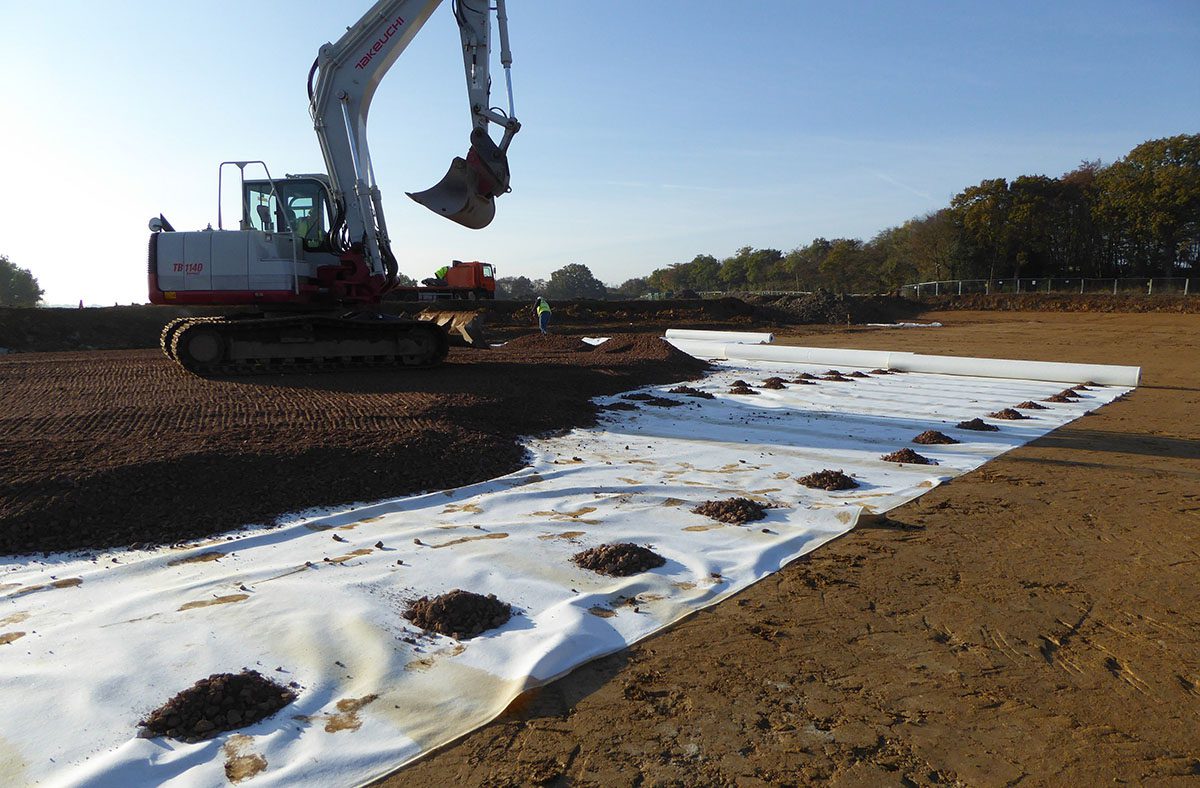
No, in most instances a simple overlap joint is sufficient to ensure any consolidation of the underlying soils does not affect the intended performance.
Typically a 300mm overlap will be sufficient, however in more onerous conditions clarity should be sought from the designer.
Data Sheets
Our in-house engineering department offers an extensive range of geosynthetic solutions created by fully qualified and experienced civil engineers.
Wherever possible, for our stocked items, we can offer a next day delivery service, direct to site to ensure your project stays on track.
Enhance your understanding of tree root protection and sustainable construction practices by attending one of our upcoming seminars. Our expert-led sessions cover a range of topics.
We are fully committed to the success of our Builders Merchant partners. Our strategy is built on a foundation of collaboration and support, ensuring that when you succeed, we succeed.