Interlock and Ekotex® – Peel Ports – Offshore wind farm
- Location
- Outer Harbour, Peel Ports, Northgate, South Beach Parade, Great Yarmouth, Norfolk, NR30 3GY
The background
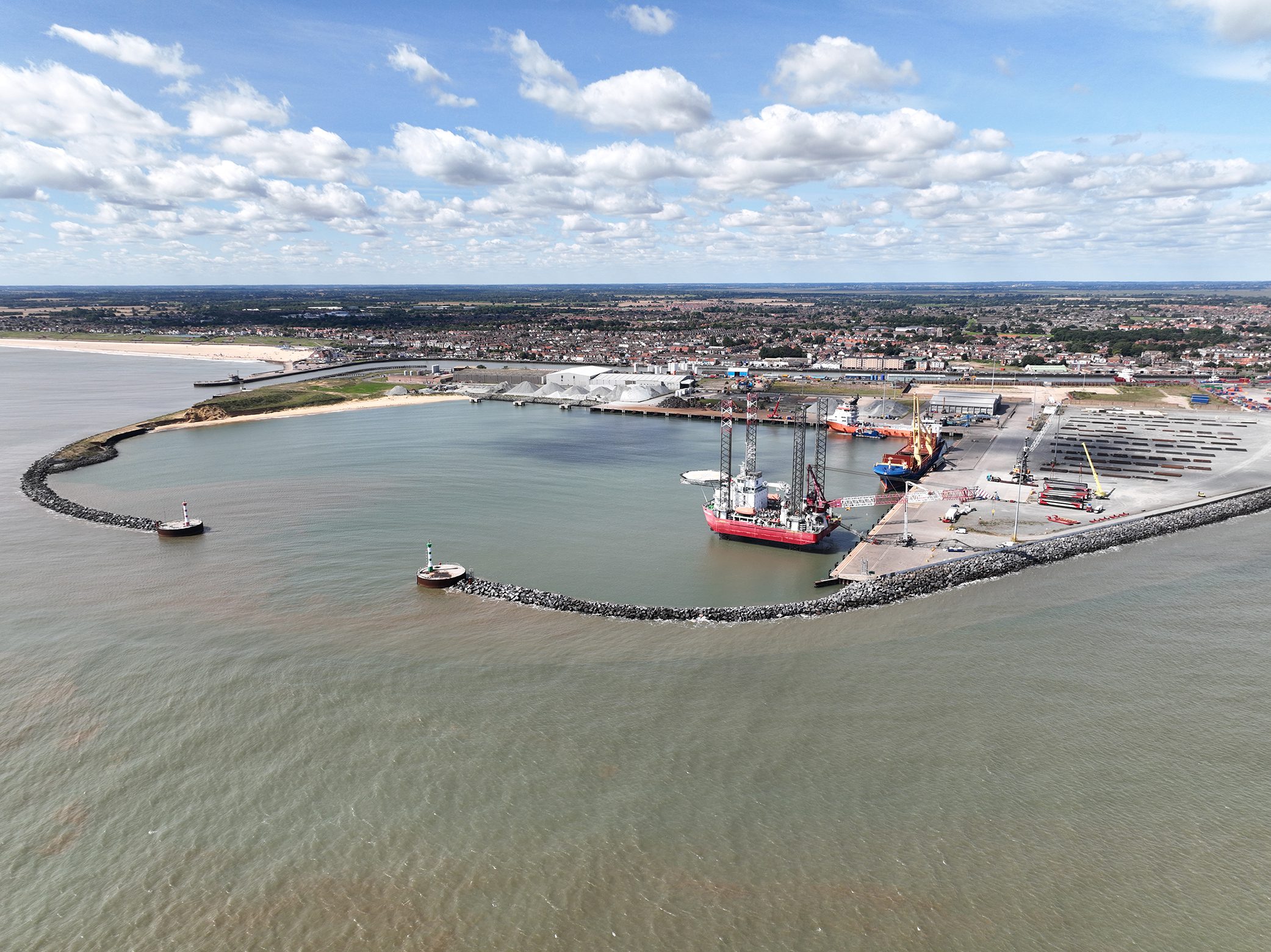
When Peel Ports undertook the development of high-performance pavement areas at their Great Yarmouth terminal, they were preparing for a massive logistical undertaking: supporting the construction of the East Anglia Two (EA2) Offshore Wind Farm. Port environments are notoriously unforgiving, and the infrastructure here needed to handle extreme, heavy-duty operational activities without failing. To tackle this ground stabilisation challenge, principal contractor Erith Contractors and Swanton Consulting partnered with the specialist engineering team at Geosynthetics Ltd.
Our client’s requirements
The core requirement was straightforward but technically demanding: engineering a high-performance logistics platform capable of supporting heavy plant machinery and relentless logistical traffic.
Traditional ground engineering methods usually mean digging deep, costly excavations and importing tonnes of expensive aggregate. Peel Ports needed a value-engineered design that bypassed these inefficiencies.
They required a multi-layered geosynthetic system that could handle soil separation and high-load reinforcement simultaneously, whilst being robust enough to secure quick, collaborative technical sign-off from the peer engineering teams.

Our value engineered solution
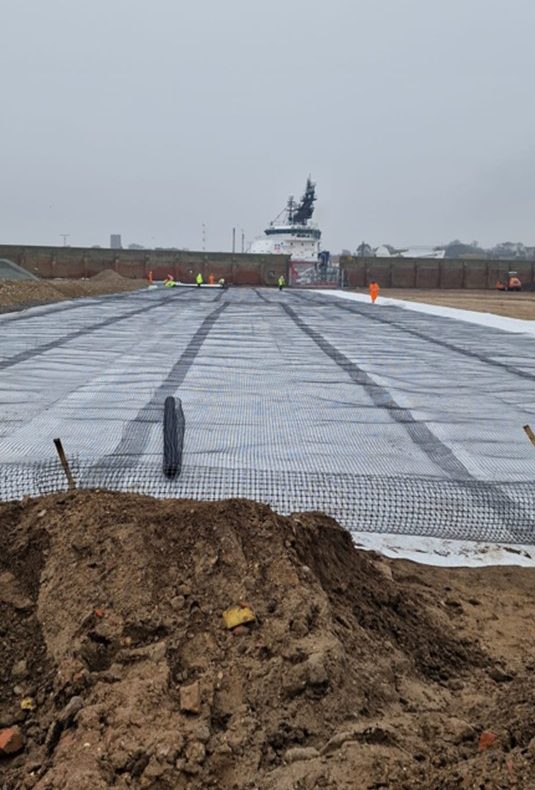
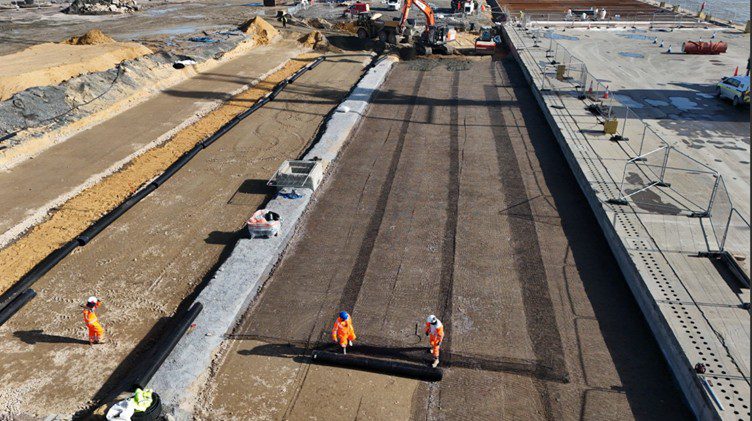
Imagine soft subgrade soil acting like mud under pressure; without reinforcement, heavy traffic forces aggregate layers to sink, causing the surface to fail. To prevent this, Geosynthetics Ltd engineered a bespoke, multi-layered system combining Interlock high-modulus geogrids with Ekotex® non-woven geotextiles.
The Interlock geogrids provide exceptional lateral restraint through aggregate interlock, mechanically locking the stone in place to increase stiffness, while the Ekotex® geotextile acts as a separation layer to prevent subgrade fines from pumping upward under dynamic loads. The solution follows the latest guidance from BS 8661:2019.
Operating under a “Design and Build” framework, our civil geotechnical engineers collaborated directly with Swanton Consulting to facilitate a seamless, rigorous technical acceptance.
Standout Result:
This smart, peer-to-peer engineering collaboration slashed initial design requirements by optimising the layers of geogrid and significantly reducing aggregate thickness. This saved approximately 25,250 tonnes of aggregate and eliminated 1,250 HGV deliveries, vastly lowering material costs, reducing local CO2 emissions, and accelerating construction times.
To review the complete design configurations, structural calculations, and technical schematics for this project, download the case study now!
-
 Hosted by Jamie Leake
Tree Root Protection.
Effective tree root protection is crucial for sustainable site development. This presentation zeroes in on our leading solution, Cellweb® TRP (Tree Root Protection). You will receive the core technical information and application guidance for Cellweb® TRP, ensuring compliance while maintaining soil permeability.
We showcase real-world case studies demonstrating successful installations and review the product guarantee. Learn exactly how you can leverage the expertise of the Geosynthetics Ltd engineering department to specify and implement the right system for your projects. -
 Hosted by David Middleton
Event Date
Geosynthetic solutions for common civil engineering applications
Explore effective geosynthetic solutions across the full spectrum of civil engineering challenges. This presentation details our complete range, from environmental drainage and accelerated consolidation systems to slope stabilisation and soil reinforcement.
We also cover geomembrane linings for containment and impermeable applications, plus innovative erosion control across temporary and permanent installations.
You will see practical application methods, real-world project case studies, and learn how you can leverage the technical expertise of the Geosynthetics Ltd engineering department for your specific project challenges.
-
 Hosted by Patricia
Sustainable Engineering Solutions using Geosynthetics for Temporary and Permanent Works
This presentation details geosynthetic reinforcement solutions, focusing on the specific challenges of wind farm projects. We cover practical design methods for reinforcing access tracks and hardstanding areas, including the use of Cellweb® TRP within tree root protection zones.
We also provide a technical overview of other key applications, such as reinforced soil walls, working platforms, and embankment support. See real-world case studies from Geosynthetics Ltd and learn how our engineering department can assist with your project designs. -
Hosted by David Middleton
Event Date
Geosynthetic Applications for Reinforcement
Discover a wide range of geosynthetic reinforcement solutions in this technical presentation. We cover practical applications from retaining walls, and reinforced slopes to foundations and working platforms and erosion control systems.
You will see real-world project case studies from Geosynthetics Ltd and learn how our engineering department can directly support your project. -
 Hosted by Colin Dobson
Event Date
Alternatives to Conventional Surfacing Solutions
Are you seeking robust alternatives to traditional surfacing? This presentation explores practical solutions for car parks, access roads, and specialist applications like ‘no dig’ zones, tree root protection, and green roofs. We introduce our proven product range, including Golpla grass reinforcement, Roofcell for rooftops, and heavy-duty Exopave pavers.
You will see practical construction methods and real-world case studies from Geosynthetics Ltd, demonstrating how to achieve stable, high-performance surfaces for challenging site conditions. -
Hosted by Colin Dobson
Tree Root Protection
Effective tree root protection is crucial for sustainable site development. This presentation zeroes in on our leading solution, Cellweb® TRP (Tree Root Protection). You will receive the core technical information and application guidance for Cellweb® TRP, ensuring compliance while maintaining soil permeability.
We showcase real-world case studies demonstrating successful installations and review the product guarantee. Learn exactly how you can leverage the expertise of the Geosynthetics Ltd engineering department to specify and implement the right system for your projects. -
 Hosted by Pablo Bernardini
Event Date
Foundation Solutions for Temporary & Permanent Works
Explore effective geosynthetic solutions for foundations on temporary and permanent works. This presentation details our complete range, of Geosynthetics systems including Geogrids, Geotextiles, Erosion Control and Drainage composites.
You will see practical construction methods and real-world case studies from Geosynthetics Ltd, demonstrating how to achieve stable, high-performance structures for challenging site conditions.