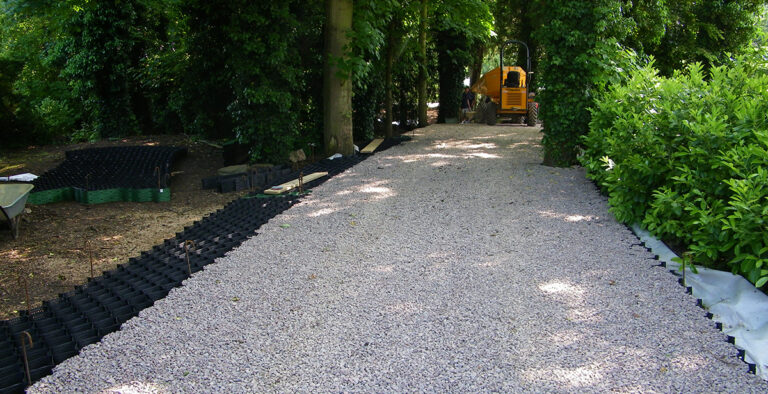


Cellweb® TRP: The Leading Tree Root Protection System

When construction takes place near protected trees, their underground structure must be carefully protected. Without proper safeguards, construction activities like traffic and soil compaction can cause serious damage, putting both the trees and project at risk.

Cellweb® TRP is the answer. As the UK’s leading, fully compliant cellular confinement system, Cellweb® is guaranteed to safeguard trees throughout the construction process and beyond.

How Cellweb® Tree Root Protection works

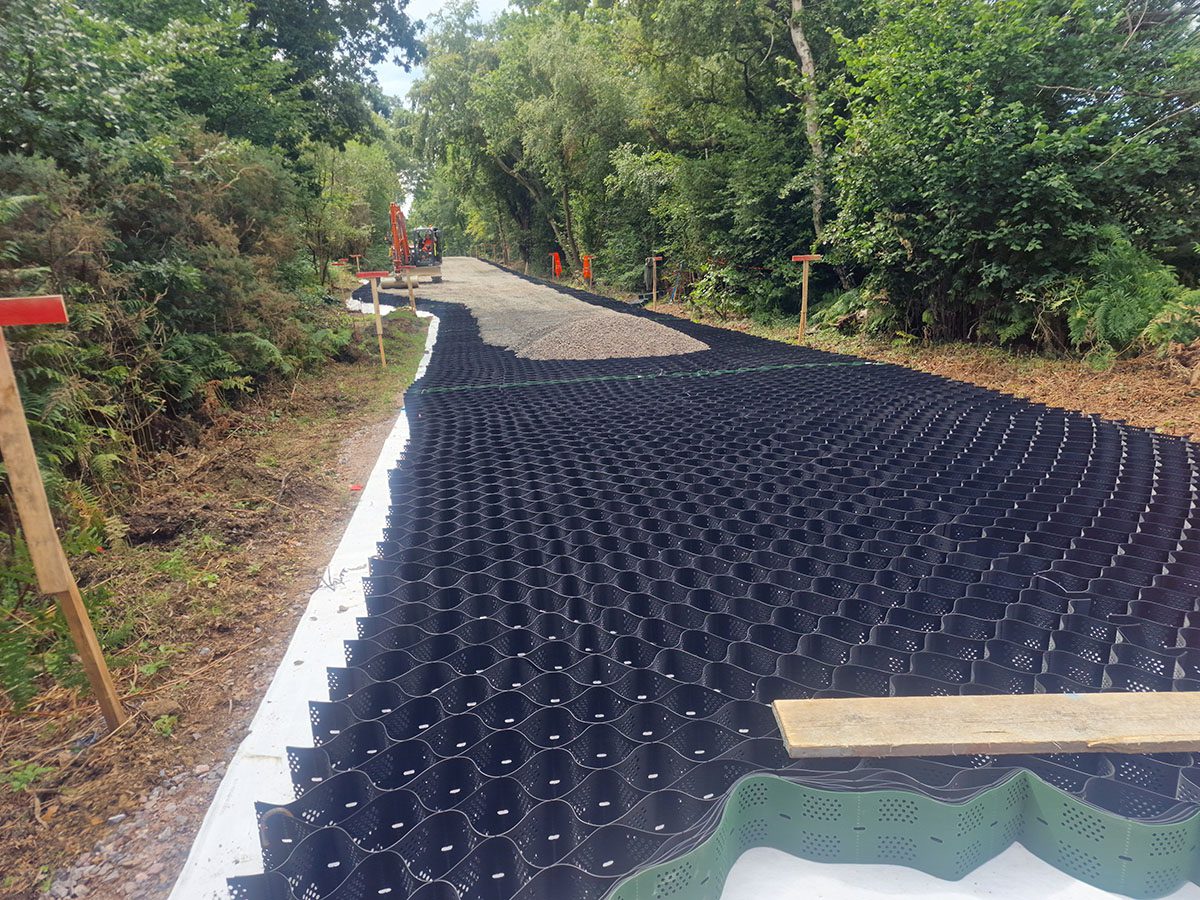
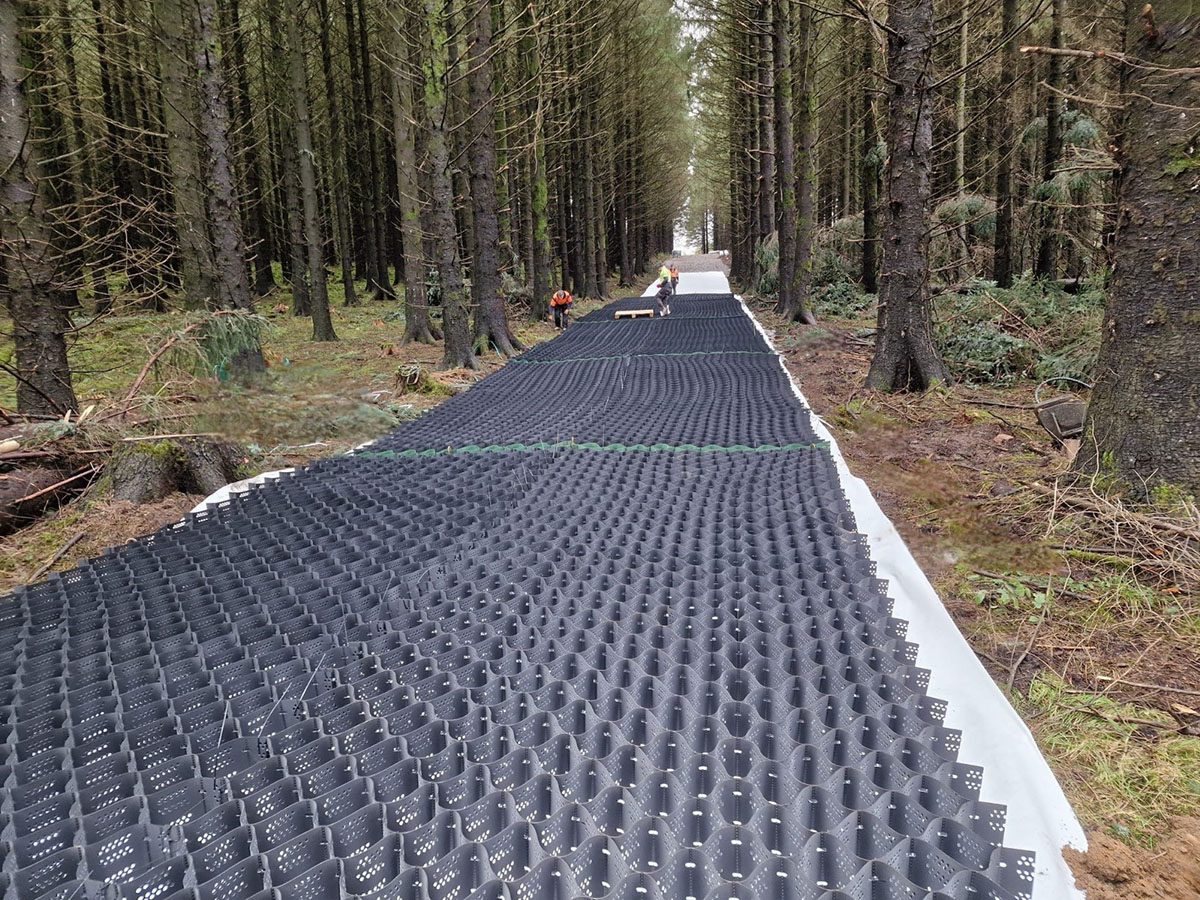
Using a unique combination of cell size, depth, and perforations, this no-dig cellular confinement system distributes weight evenly across the surface of the ground to prevent soil compaction, and protect tree roots from damage. Its perforated cell walls and stone infill allow water and air to reach the roots, protecting mature trees and promoting the healthy growth of saplings. 

Cellweb® TRP can also reduce sub-base depths by up to 50% over conventional methods, helping to prevent surface rutting and reduce infill material needs, while improving both performance and appearance. 

Fully compliant with BS5837:2012, APN 12, and Tree Preservation Order (TPO) guidelines, Cellweb® is the UK’s go-to solution for building around trees without harming them. 

Cellweb® Tree Root Protection : Effectiveness Guaranteed

Guaranteed System

Represents trust, reliability, and guaranteed performance.

Independently Verified

Symbolises scientific testing and independent validation.

True No-Dig Installation

Illustrates root protection and minimal soil disturbance.

Reduced Sub-Base Requirement

Conveys thinner ground layers and material savings.

Prevents Surface Deformation

Represents rutting resistance and long-term surface stability.

Fully Compliant Solution

Indicates standards compliance and regulatory approval.

Quick & Easy to Install

Symbolises fast and simple installation process.

Expert Technical Support

Represents expert advice and engineer-led assistance.

Need Help?

01455 617 139

Main Office

[email protected]

Free consulation

Your Cellweb® TRP Questions Answered

Yes. Cellweb® TRP is explicitly stated to be fully compliant with BS5837:2012 and APN 12.

Key compliance factors include:


  • No-dig construction in accordance with BS5837 requirements for tree root protection.
  • Designated for use within Root Protection Areas (RPAs) with no excavation and strict protection against soil compaction, both of which are required by BS5837.
  • Meets BS5837:2012 technical requirements for three-dimensional cellular confinement systems for load distribution around tree roots.
  • Ensures continued water and oxygen permeability, preserving root health as required under BS5837.

Yes, in most cases. Cellweb® TRP is widely recognised and routinely accepted by UK planning authorities because:


  • It is fully compliant with BS5837:2012, the standard used by local authorities when assessing development near trees.
  • It is a no-dig system, which tree officers typically require within RPAs.
  • It has been adopted by councils and used on local authority projects, including footpaths and infrastructure within RPAs.


Most planning authorities request a method statement and drawings based on accurate ground conditions (CBR value), but normally approve the system when it complies with BS5837.

Yes. Cellweb® TRP is specifically designed for installation within Root Protection Areas (RPAs) / Tree Protection Zones.


  • It is described as a no-dig tree root protection measure, intended for construction directly within RPAs.
  • Evidence shows it reduces soil compaction, protecting roots even under vehicular traffic.
  • It enables installation without disturbing the soil profile, which is a fundamental requirement inside TPZs.

Yes. Cellweb® TRP is suitable and regularly used on sites protected by TPOs.


    • The system is compliant with TPO guidelines, as stated in manufacturer and third-party documentation.
    • TPOs require strict non-invasive measures such as no-dig construction and minimal compaction, both of which Cellweb® TRP provides.


As long as the installation method follows the arboricultural method statement and local authority guidance, Cellweb® TRP fully satisfies TPO protection requirements.

Yes — Your Cellweb® TRP is the only tree root protection system on the UK market that has undergone independent testing. Testing was carried out by The Environmental Protection Group Limited.


    • It is explicitly stated to be independently tested, making it unique among TRP systems in the UK.
    • It has also undergone performance trials showing reduced sub-soil compaction, referencing work based on independent field trials.
    • Long-term tree vitality assessments further support its effectiveness in maintaining tree health after installation.


Independent trials carried out at the SEL Environmental pavement monitoring facility in Bury compared the levels of soil compaction generated during the construction of a conventional pavement using Type 1 sub-base with a pavement constructed using open-graded aggregate reinforced with Cellweb® TRP. Both test areas were completed with a 60 mm asphalt surface, ensuring a consistent comparison.
The results clearly demonstrated that the soils beneath the Cellweb® TRP reinforced pavement experienced significantly lower levels of compaction compared with those beneath the conventional Type 1 construction. For the fine sand subgrade used in the trial, the recognised threshold at which tree root damage begins is a bulk density of 1.75 Mg/m³. Measurements showed that the Cellweb® TRP system kept bulk densities well below this critical limit, confirming its effectiveness in protecting soil structure and maintaining conditions suitable for healthy root function.

Yes. Cellweb® can be used as part of a permanent ground protection solution when designed for long-term loading.
It helps distribute loads and reduce soil compaction over tree root zones.
Performance depends on correct design, infill material, and installation.

Yes. Cellweb® does not form a root barrier and allows roots to grow beneath the system.
Root growth depends on soil conditions, oxygen and gaseous exchange and infill type, not the Cellweb® itself.
The system protects roots by reducing compaction and shear stress.

Yes. Cellweb® can be removed by excavating the overlying layers if required.
It is typically manufactured from recyclable polymer materials.
Recycling feasibility depends on material type and site contamination.

Depends on the design, typically it’s installed below the finished surface and is not visible in normal use.
It is typically covered with aggregate, soil, or a permeable paved surface.

Most issues arise from design, installation, or loading factors, rather than the material itself.
Cellweb® helps reduce compaction and shear but cannot eliminate all site-related risks to roots.
Cellweb® is supplied with a 10-year product guarantee, subject to the manufacturer’s guarantee conditions and correct installation.

Cellweb® Resources & Downloads

Cellweb® Case Study Library

  • Cellweb® – 69 Church Lane – Tree Root Protection
    Cellweb® – 69 Church Lane – Tree Root Protection
    In spring 2016 Geosynthetics Ltd were contacted by Robert Yates of RGS Arboricultural Consultants regarding a new driveway at a...
  • Cellweb® – Calke Abbey – Ancient Tree Protection
    Cellweb® – Calke Abbey – Ancient Tree Protection
    ‘The Old Man of Calke’ is Calke Abbey’s oldest tree and is thought to be up to 1200 years old....
  • Cellweb® – Hurst Farm Heritage Trail – Tree Root Protection & Footpath
    Cellweb® – Hurst Farm Heritage Trail – Tree Root Protection & Footpath
    Rejuvenating Heritage Trails with Geosynthetics Ltd: Discover the innovative approach used to transform Hurst Farm Woodland into a welcoming heritage...
  • Cellweb® – Keats Way – Tree Root Protection
    Cellweb® – Keats Way – Tree Root Protection
    Following the recommendations in Arboricultural Practice Note 12 and BS 5837 2005 and 2012, three dimensional cellular confinement systems have...
  • Cellweb® – Saffron Lane, Leicester – Cycle path
    Cellweb® – Saffron Lane, Leicester – Cycle path
    Leicester City Council contacted Geosynthetics limited as they wanted to create a new footpath and cycle way from Saffron lane...
  • Cellweb® – The Barn at Parkfield – Roadway Construction
    Cellweb® – The Barn at Parkfield – Roadway Construction
    Read about this project case study.
  • Cellweb® and Golpla™ – Barnfield College – Tree Root Protection & Pathway
    Cellweb® and Golpla™ – Barnfield College – Tree Root Protection & Pathway
    Read about this project case study.
  • TTE™ and Cellweb® – Ladycross Lodge & Touring Park – Car Park and access road
    TTE™ and Cellweb® – Ladycross Lodge & Touring Park – Car Park and access road
    Discover how Geosynthetics Ltd engineered a cost-effective and environmentally responsible solution for tree root protection and high-load surfaces at Ladycross...

How Cellweb® TRP Works: Engineered for Tree Roots

Cellweb® TRP provides a stable and load-bearing foundation, distributing weight evenly to prevent harmful soil compaction within the tree root protection area. This allows essential water and nutrients to reach the roots, promoting and maintaining healthy growth.

Understanding the Threats: Protecting Tree Roots During Construction

Did you know that soil compaction is the most significant risk to trees on development sites? Compaction squeezes out the oxygen, minerals, and water that tree roots desperately need. When this happens, the roots become starved, impacting the tree’s health and stability.

This compaction often stems from the construction itself – think new access roads, car parks, or roadways built over the tree root protection area. The problem is often worsened by site traffic moving across the area before adequate tree protection is in place.


But compaction isn’t the only culprit.
Other factors contributing to root damage include:
  • Storing materials within the tree root protection area.
  • Creating surfaces that don’t allow water or air to penetrate, essentially suffocating the roots.
  • Raising ground levels, which buries the roots too deep.
  • Using inadequate tree protection measures.
  • Cutting or disturbing roots during excavation or other groundworks.
  • Building too close to the tree, causing physical damage and restricting its growth.

The Impact: Cellweb® TRP for Healthy Trees and Sustainable Development

See the dramatic difference our innovative tree root protection system makes for both trees and construction projects.

Without Cellweb® TRP

  • Soil rutting and compaction
  • Physical root damage
  • Restricted oxygen and water channels
  • Roots exposed to contamination
  • Root dieback
  • Overall tree decline

With Cellweb® TRP

  • Even weight distribution
  • Root damage prevention
  • Unrestricted water and oxygen flow
  • Root contamination protection
  • Reduced sub-soil compaction
  • Healthy trees

Ready to safeguard your trees?

Our Civil Engineers and Tree Root Protection team offer free technical advice and training seminars.

Our Services Support Smarter Ground Solutions

Engineering Solutions

Our in-house engineering department offers an extensive range of geosynthetic solutions created by fully qualified and experienced civil engineers.

Next Day Delivery

Wherever possible, for our stocked items, we can offer a next day delivery service, direct to site to ensure your project stays on track.

Seminars

Enhance your understanding of tree root protection and sustainable construction practices by attending one of our upcoming seminars. Our expert-led sessions cover a range of topics.

Merchant Support

We are fully committed to the success of our Builders Merchant partners. Our strategy is built on a foundation of collaboration and support, ensuring that when you succeed, we succeed.

Get your quote today!

"*" indicates required fields

Name*

Register your interest!

"*" indicates required fields

Name*

Please complete the form to request access to the resource.

"*" indicates required fields

This field is hidden when viewing the form